St. Augustine's Church and House
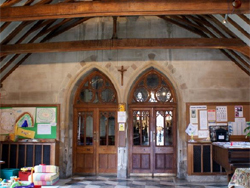
Our church is a Victorian landmark with a sumptuous interior, and stands at the centre of the Conservation Area that bears its name. Both the church and the church hall - St. Augustine's House (shown right) - are available for hire. The church hall has a very good kitchen and food preparation facilities. It can accomodate up to 40 people and may be used for meetings, parties, receptions etc.
The nave of the church can be used for larger meetings and can accomodate up to 600 comfortably. The church is also an attractive concert venue, having an excellent acoustic and a fine pipe organ. Safe parking is available around the church. Moreover, as a photogenic church, it is also popular for weddings and christenings.
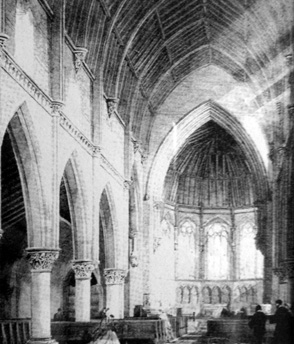
The Interior of St. Augustine's Church
We work diligently to maintain the interior of our church, in order to provide a suitable place of worship and to honour and glorify God.
The new lighting scheme at St. Augustine's has been designed to accentuate the architectural features of the building and of our liturgical practice.
The Carvings at St. Augustine's Church
We are proud of the expert carvings at St. Augustine's, which are the work of John Roddis who lived between 1839 and 1887. A prominent architectural sculptor with premises on Aston Road in Birmingham, Roddis did much carving for churches, most notably St Augustine of Hippo, Edgbaston (1868); St Catherine of Sienna (1875, now demolished) Goulburn Cathedral, South Australia; and Christchurch Cathedral, New Zealand (which he died during the building of).
He also completed the exterior carving of Birmingham Museum & Art Gallery (1885, excluding the tympanum) and was responsible for a number of monuments including the Earl of Derbys tomb at Knowsley (1872) and the Augustine Memorial erected by Lord Granville on the Isle of Thanet.
He was a founder member of the Midland Arts Club and became its President in 1885. He was also a member of the Minicipal Arts Club. As well as carving the corbels shown above, he also created the reredos at St. Augustine's.
The Stained Glass Windows at St. Augustine's Church
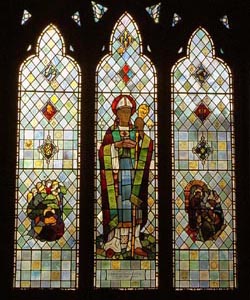
One of the most treasured aspects of our church is our collection of Stained Glass. Please click on the numbers below to see the various windows.
The Memorials at St. Augustine's Church
There are many memorials in St. Augustine's Church, placed in memory of loved ones now departed. May they rest in peace and rise in glory!
A portland stone memorial was erected after the Great War by an unknown sculptor, the guardianship of which is held by the PCC. It lists all those men from the parish who were lost in the conflict 1914-1918 and subsequently had those men added who died in the Second World War.
The form of the memorial is tapering block of stone, on a wider base and kerb to the fore is the incription...
"IN HONOURED MEMORY
OF ALL THOSE WHO WENT
FROM THIS PARISH AND
FELL IN THE GREAT WAR
1914-1919
AND
1939-1945"
and on each of the other three sides are the lists of the fallen. At the top of the memorial, above each of the four sides, is a victory wreath of laurel, which in turn is surmounted by 4 female figures in flowing gowns, united as one, by clasping 4 further laurel wreaths, at each corner of the memorial. The whole ensemble is topped by a stone representation of the eternal flame, keeping alive the memory of these departed who made the ultimate sacrifice
"FOR GOD AND COUNTRY."
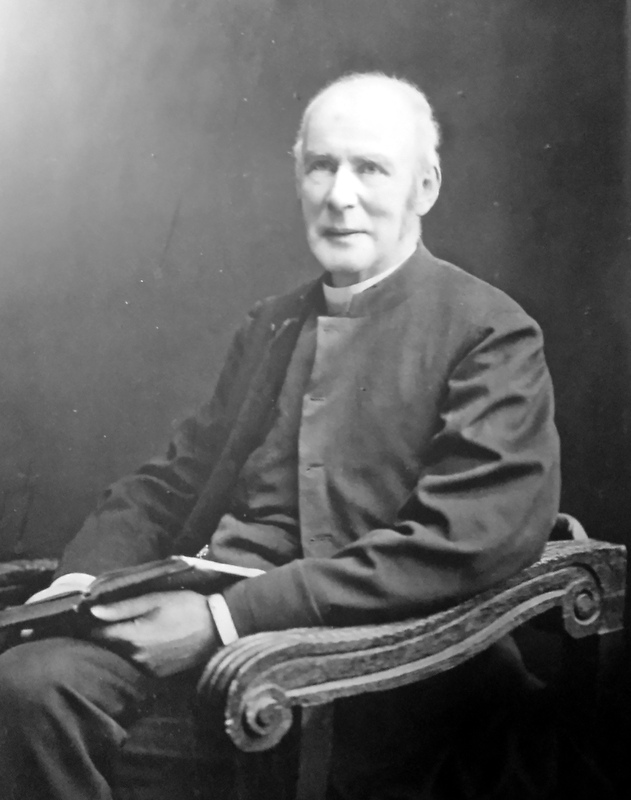
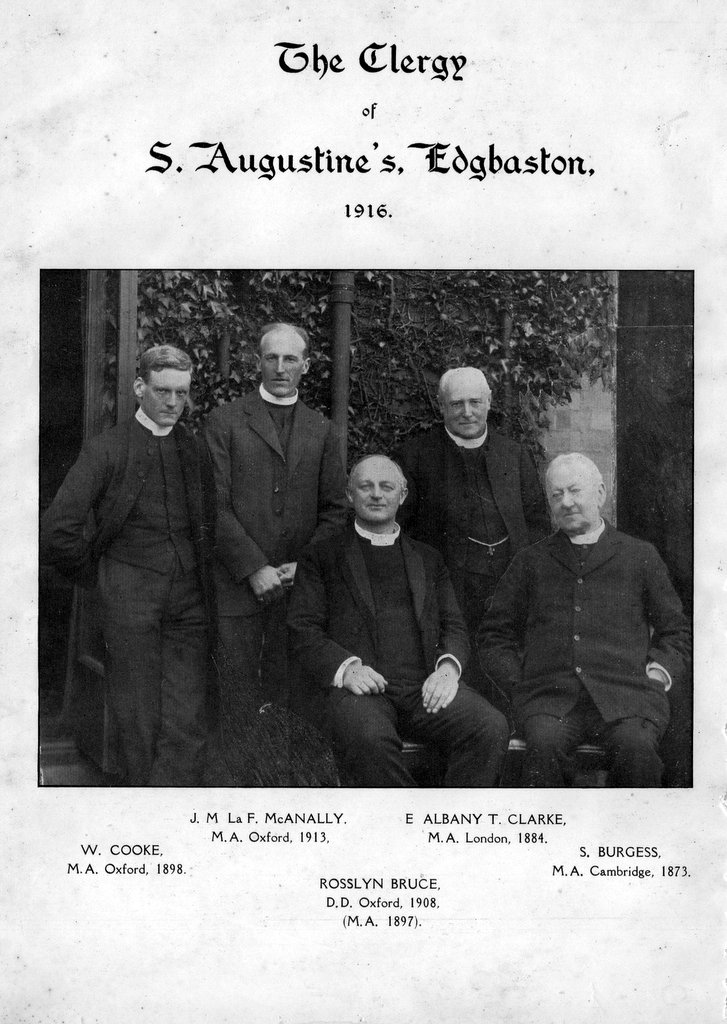
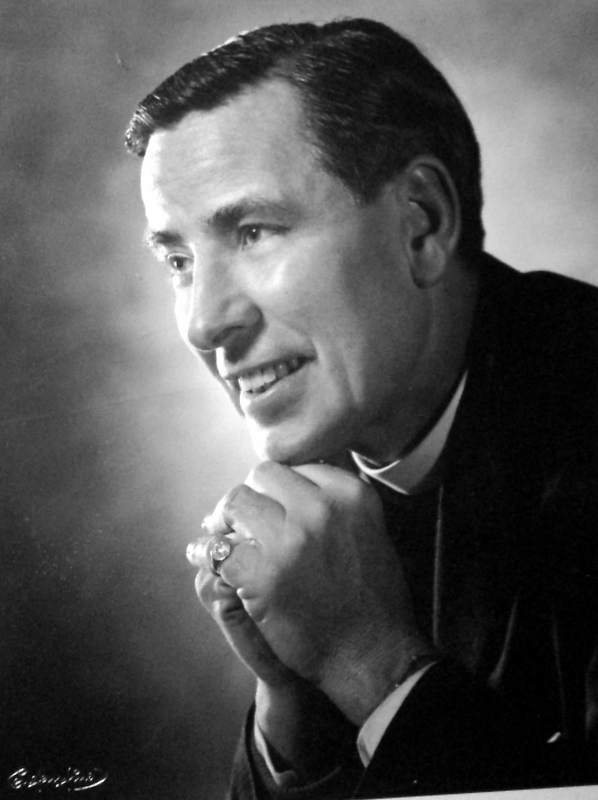
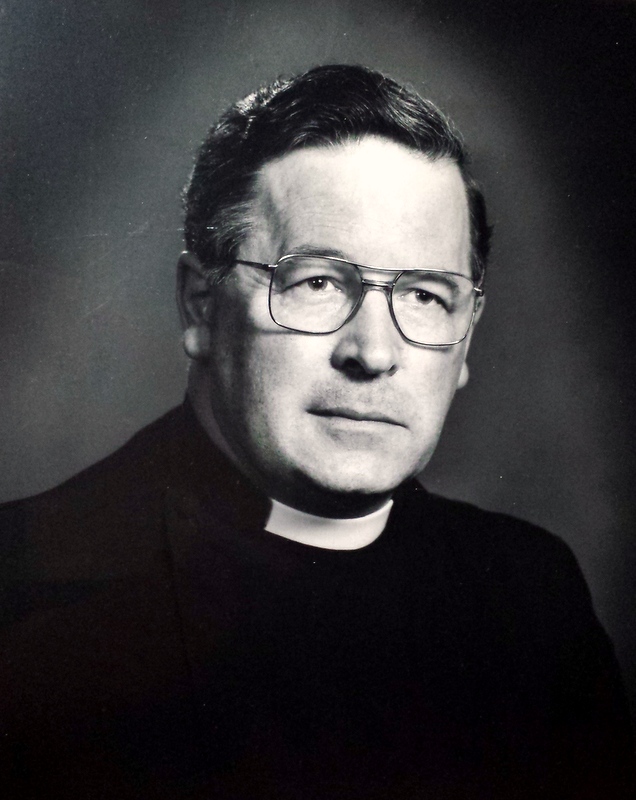
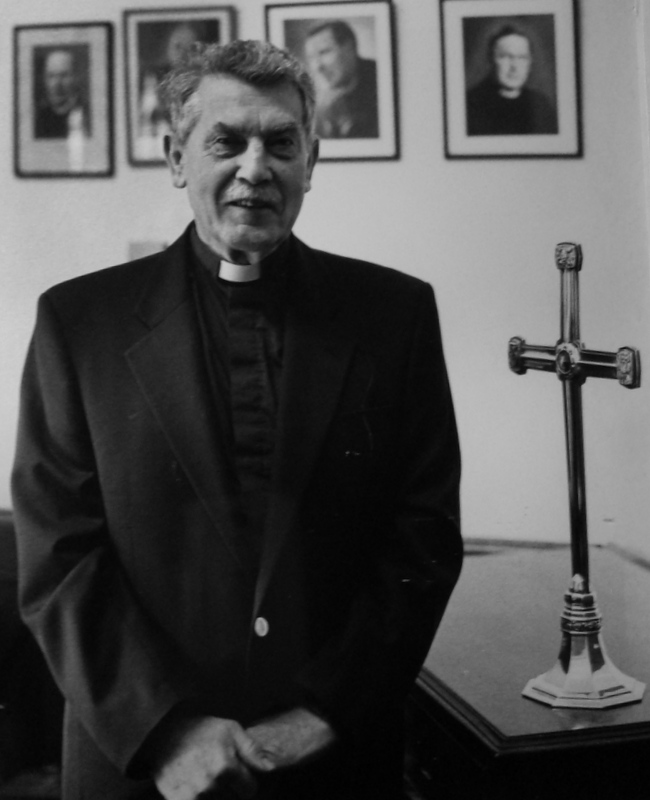
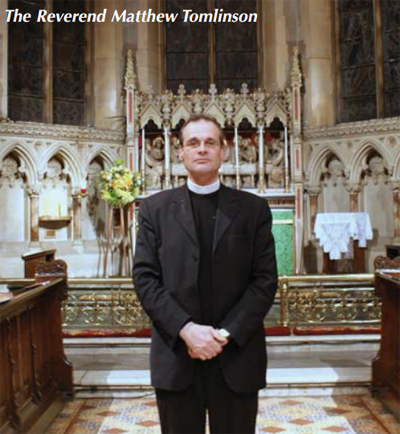
VICARS OF ST. AUGUSTINE'S | ||
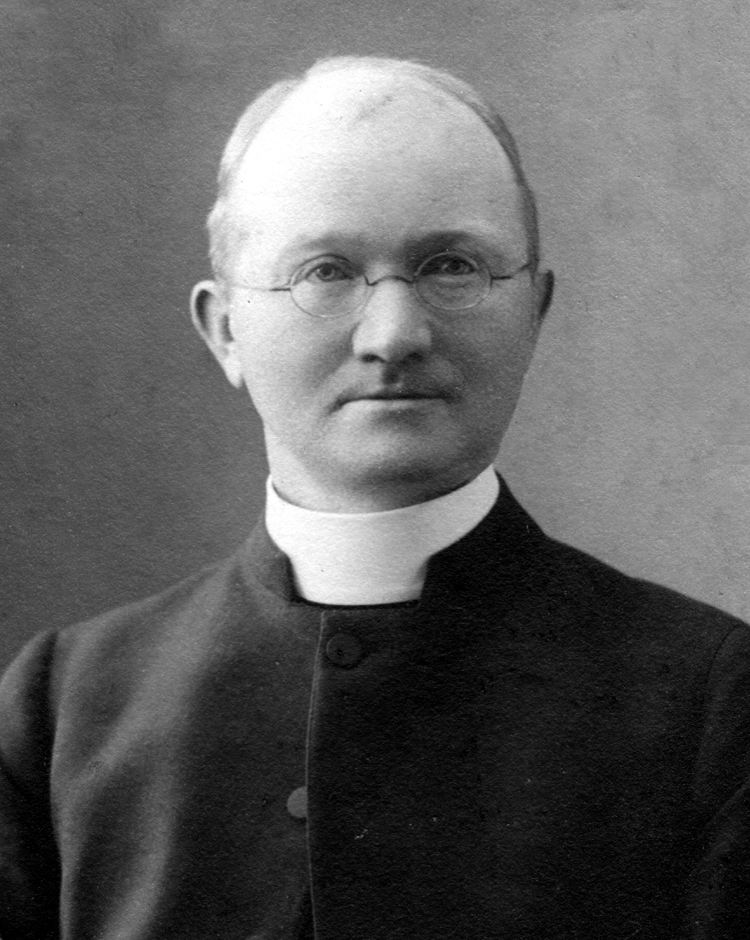
1868 - 1903 | Mr J. C. Blissard | |
1903 - 1912 | Mr W. O. Burrows | |
Archdeacon Burrows became Bishop of Truro in 1912 | ||
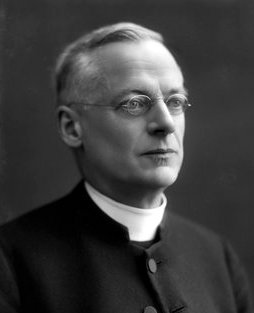
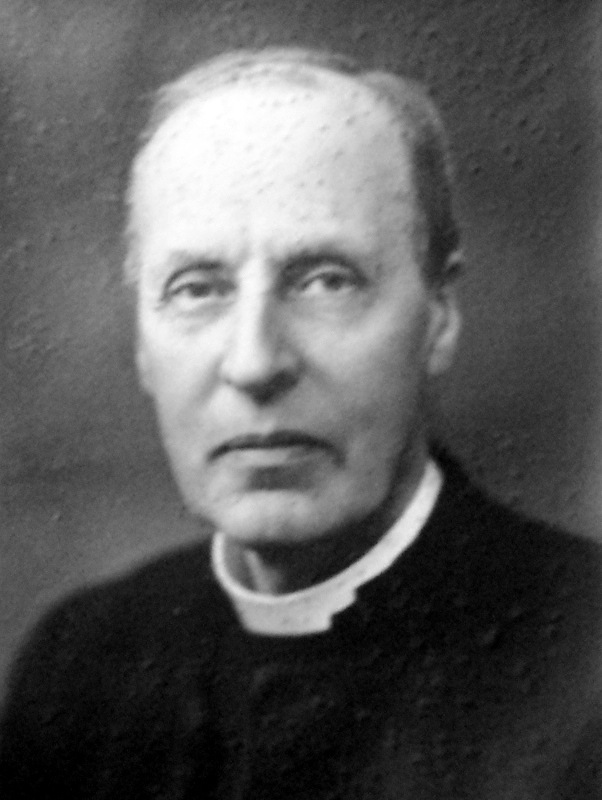
1912 - 1923 | Dr Rosslyn Bruce | |
1923 1929 | Mr Arthur Gittins Lloyd | |
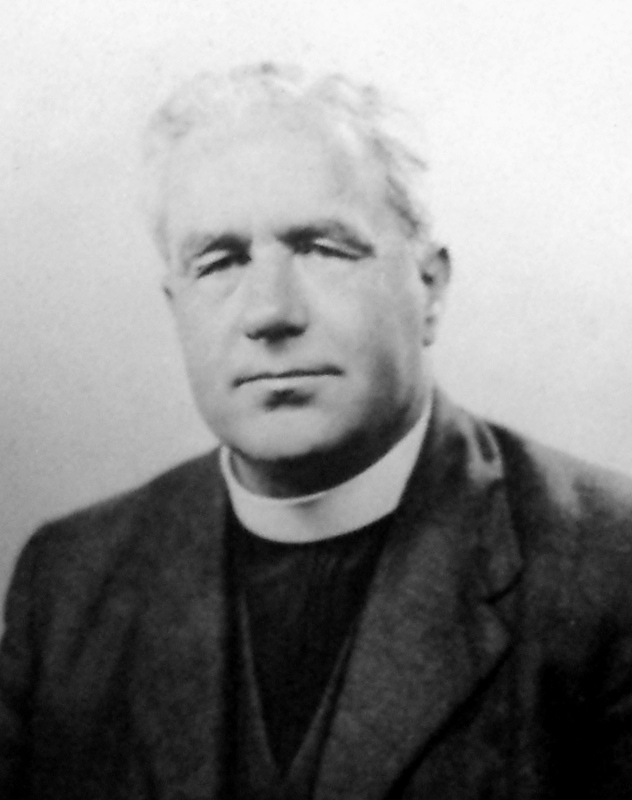
1929 1938 | John Harrold Richards | |
1938 1949 | John Cuthbert Lucas | |
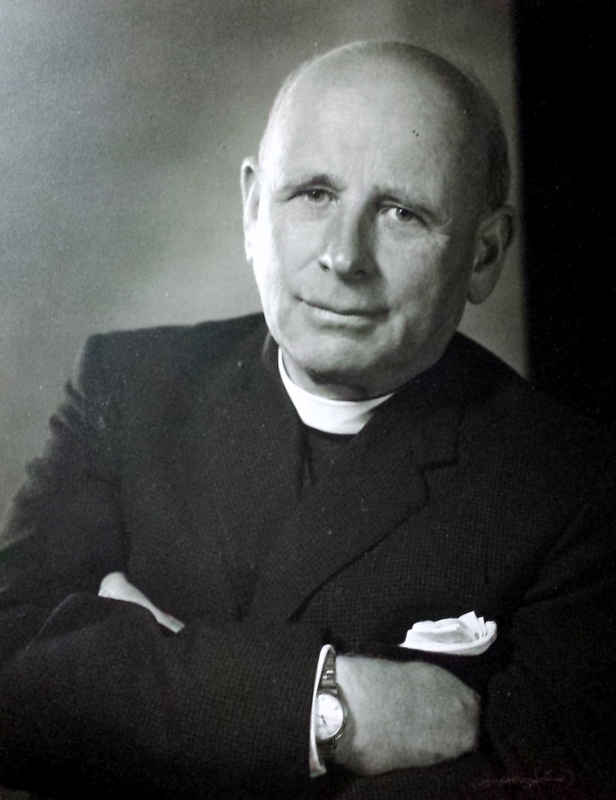
1949 1964 | Cannon Cecil Rhodes | |
1965 1977 | Philip Llewellyn Richards | |
1978 1985 | Maxwell Lucas | |
1986 1999 | Raymond Price | |
2000 - | Matthew Tomlinson | |
CHURCH WARDENS OF ST. AUGUSTINE'S | ||
1868 1871 | J. Beattie | |
1868 1870 | J. Cheshire | |
1870 1871 | H. Lowe | |
1871 1872 | C. H. Chance | |
1871 1872 | G. Allcock | |
1872 1873 | Captain Peel | |
1872 1873 | P. H. Chavasse | |
1873 1874 | J. T. Tilley | |
1873 1874 | E. Barney | |
1874 1875 | R. H. Milward | |
1874 1875 | C. T. Parsons | |
1875 1880 | J. Beattie | |
1875 1880 | T. Horton | |
1880 1883 | J. Gill | |
1880 1883 | J. Grimley | |
1883 1884 | B. D. Hopwood | |
1883 1884 | O. F. Thompson | |
1884 1886 | F. Selby | |
1884 1886 | G. E. Wright | |
1886 1888 | B. W. Stevens | |
1886 1888 | S. Walliker | |
1888 1892 | H. Lea | |
1888 1890 | R. W. Hedley | |
1890 1892 | J. B. Chantrill | |
1892 1895 | F. Marsh | |
1892 1896 | W. Jennens | |
1895 1896 | E. Mapplebeck | |
1896 1899 | A. L. Lowe | |
1896 1898 | P. Bates | |
1898 1899 | E. C. Keay | |
1899 1900 | J. Adie | |
1899 1903 | F. Willcocks | |
1900 1906 | E. C. Keay | |
1903 1905 | W. Jennens | |
1905 1906 | A. L. Lowe | |
1906 1909 | E. J. Harrison | |
1906 1909 | C. F. Crowder | |
1909 1911 | F. Swinson | |
1909 1910 | A. V. Blakemore | |
1910 1912 | A. K. Incledon | |
1911 1912 | C. H. Heath | |
1912 1915 | W. J. Scott | |
1912 1913 | H. E. Stilgoe | |
1913 1914 | A. L. Lowe | |
1914 1915 | J. Humphreys | |
1915 1916 | A. V. Blakemore | |
1915 1917 | G. Turner | |
1916 1919 | C. Crump | |
1917 1921 | H. T. Ledsam | |
1919 1920 | H. J. R. Murrey | |
1920 1922 | F. Jervis | |
1921 1922 | A. V. Blakemore | |
1922 1924 | G. T. W. Coleman | |
1922 1924 | H. J. Greening | |
1924 1925 | A. K. Incledon | |
1924 1925 | A. D. C. Amos | |
1925 1926 | W. L. Holland | |
1925 1926 | L. A. Gover | |
1926 1935 | A. W. Willett | |
1926 1928 | E. C. H. Morris | |
1928 1930 | G. W. Cram | |
1930 1933 | J. H. Goode | |
1933 1936 | W. E. Groves | |
1935 1939 | B. F. Butterworth | |
1936 1938 | H. O. Vaux | |
1938 1940 | N. Parr | |
1939 1941 | W. E. Groves | |
1940 1941 | N. C. Parsons | |
1941 1945 | B. F. Butterworth | |
1941 1943 | W. M. Robinson | |
1943 1947 | A. H. Cooke | |
1945 1948 | W. G. Saunders | |
1947 1952 | A. J. Dudley | |
1948 1953 | W. J. Brindley | |
1952 1953 | P. E. A. Eames | |
1953 1956 | H. R. Bettinson | |
1953 1955 | A. J. Dudley | |
1955 1959 | F. C. A. Ledsam | |
1956 1958 | C. L. Valter | |
1958 1960 | T. L. Perry | |
1959 1962 | R. D. Turner | |
1960 1961 | B. C. Kirk | |
1961 1962 | J. N. B. Gilmore | |
1962 1966 | T. W. V. Tayler | |
1962 1964 | R. G. Birch | |
1964 1967 | J. R. Bettinson | |
1966 1969 | J. K. Marshall | |
1967 1972 | G. B. Lambourne | |
1969 1979 | L. H. M. Fowle | |
1972 1974 | M. Wilson | |
1974 1999 | G. L. Bird | |
1979 1987 | F. W. Weston | |
1987 1988 | J. K. Marshall | |
1988 2003 | S. D. Comis | |
1999 2005 | R. E. Nagle | |
2003 2009 | C. Bovaird | |
2005 2008 | N. Vaughan | |
2008 - | M. Usher-Somers | |
2009 - | S. J. Hartland | |
A History of St. Augustine's Church
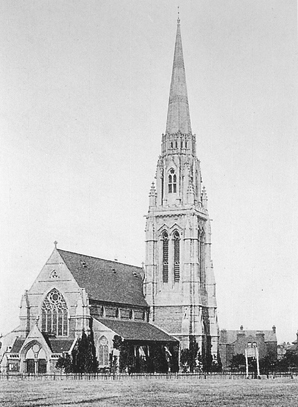
St. Augustine's Church, consecrated in 1868, was the third new church to be built during the nineteeth century in the old parish of edgbaston.
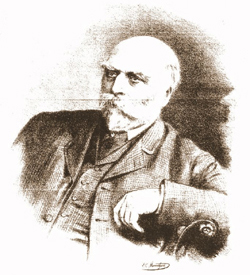
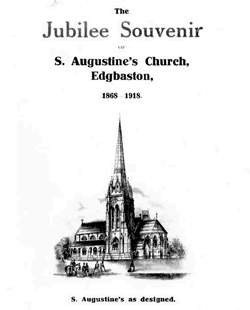
The church was built to a design by J.A Chatwin who was pupil and later assistant to Sir Charles Barry, architect of the Houses of Parliment.
Julius Alfred Chatwin was the architect of many fine churches and other buildings in Birmingham including the rebuilding of St. Martins (Birmingham Parish Church) and Aston parish church. he died in 1907 at the age of seventy-seven and is buried in the churchyard at Edgbaston Old Church.
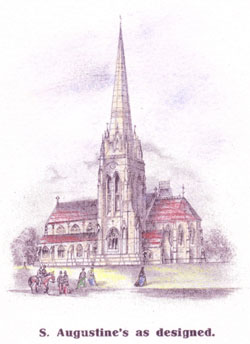
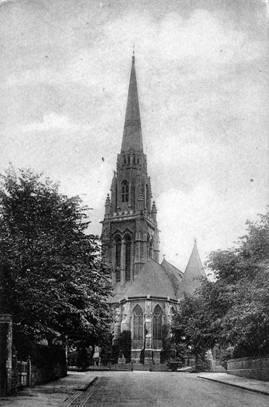
In 1877 the original design of St. Augustine's was completed by the erection of the tower and spire which together rise to a height of 185 feet. St Augustine's is one the tallest and most beautiful modern spires in the Midlands, and is a landmark for miles around.
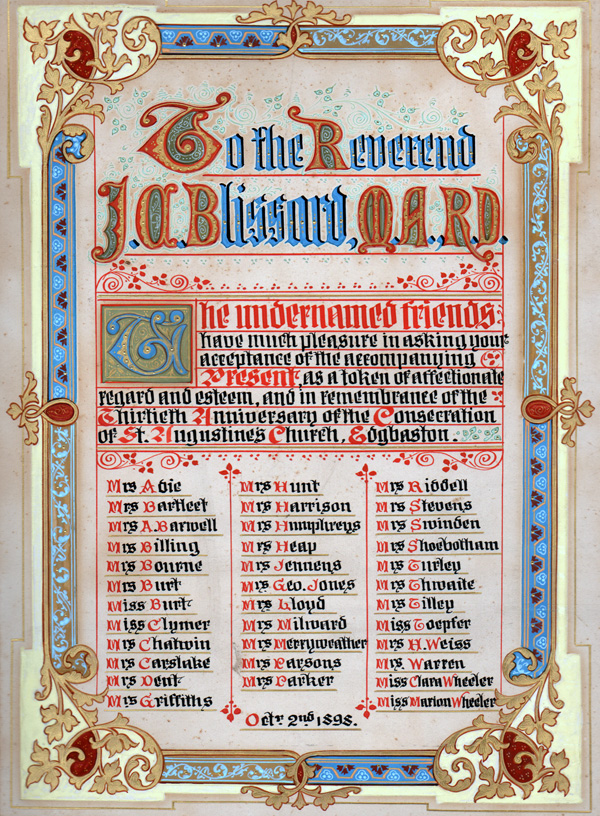
To commemorate the achievement of their church wardens, the congregation of St. Augustine's set a large stained glass window in the South Transept under the tower. This window was destroyed by enemy action in 1940 and it was replaced by a new window in memory of Canon Lucas (see above), who was the sixth vicar at St Augustine's.
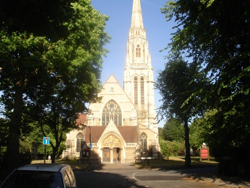
In 1968, to commerate the 100th aniversary of St. Augustines, the building of a narthex was started (see below).
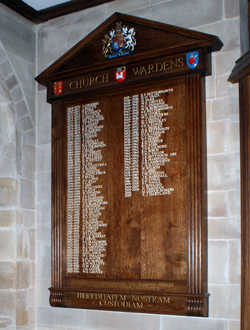
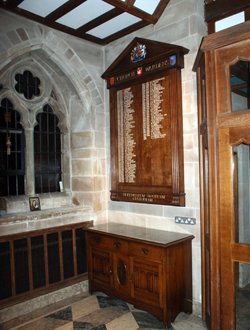
At the Accession Sunday service on the 5th February 2012, Mr Spiro Comis and Mrs Joan Bird (the widow of Gerry Bird) with the Lord Mayor unveiled a newly crafted board listing all of the Churchwardens since 1868. The Churchwardens Board, wrought in solid English Oak, now hangs in the Narthex.
|
|